Quick answer
Identify whether your wall is plasterboard, solid masonry or dot-and-dab. Use a cable detector before drilling. Fix the first bracket, hang it loosely, then hold a spirit level across to the second bracket to mark the exact position. Drill, plug and screw both brackets, checking they are level before loading the shelf.
A shelf that looks straight but is fixed to the wrong wall type will eventually sag or fall. Before you drill anything, identify whether you have plasterboard on studs, solid masonry, or dot-and-dab plasterboard. Each needs a different fixing. Then use a simple one-bracket-first method to avoid the common error of drilling both sides before levelling.
What you’ll need
- Spirit level (at least 30 cm)
- Cable and pipe detector
- Drill with masonry and wood bits
- Wall plugs and screws sized for your wall type
- Shelf brackets
- Pencil
- Tape measure
- Stud finder
Step by step
- 1
Identify the wall type and scan for cables
Tap the wall to listen for a hollow sound, which suggests plasterboard. Solid masonry sounds dull. Use a cable detector across the whole area where you plan to drill, even if the position looks safe. Mark any cables or pipes and move your bracket position if necessary.
- 2
Mark the first bracket
Hold the shelf in its intended position and mark the top edge with a light pencil line. Do not measure from the floor — floors are rarely level. Position the first bracket no more than 400 mm from the end of the shelf and mark the top screw hole.
- 3
Drill and fix the first bracket
Drill the marked hole, insert the correct wall plug for your wall type, and screw the first bracket in place. Leave the screw slightly loose so the bracket can still move a little. Do not fully tighten yet.
- 4
Level across to the second bracket
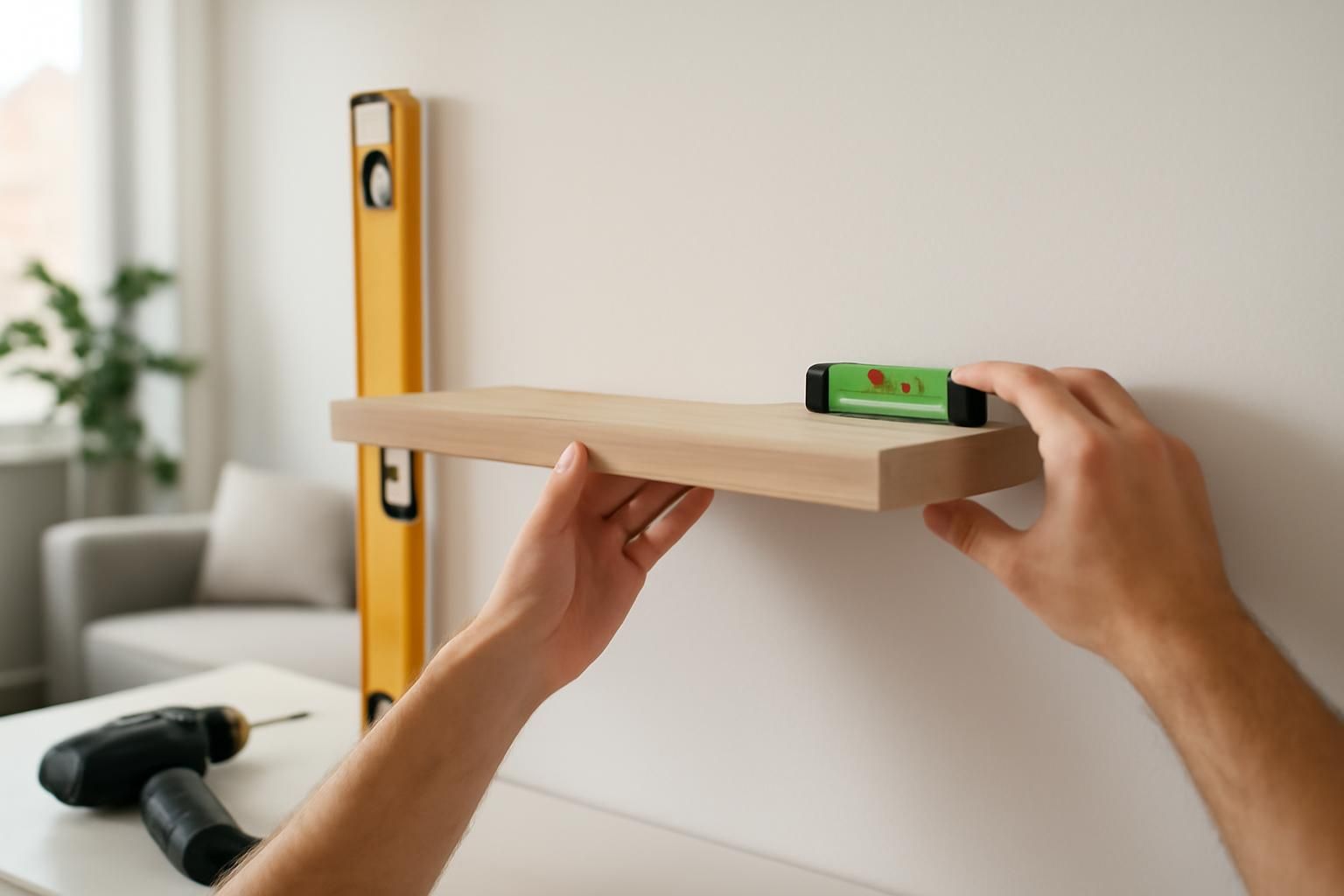
Place the spirit level on top of the first bracket and extend it across to where the second bracket will go. Adjust until the bubble is centred, then mark the top screw hole of the second bracket directly from the level. This guarantees the brackets are aligned.
- 5
Drill and fix the second bracket
Drill the second hole, insert a wall plug and screw the second bracket in place. For a long shelf, add a third bracket in the middle, spacing brackets no more than 600 mm apart. Tighten all screws fully once every bracket is in position.
- 6
Mount the shelf and check the load
Place the shelf on the brackets and check with the spirit level along the front edge. Tighten any bracket screws that secure the shelf from underneath. As a rule, 18 mm MDF on brackets at 600 mm spacing holds roughly 20 kg per bracket. For heavy loads such as books, use 25 mm board or reduce bracket spacing.
The biggest hazard is a shelf collapsing because it is fixed into the wrong wall type or loaded beyond its capacity. Always use wall plugs in masonry and fixings rated for the intended weight. If you are mounting a very heavy shelf above head height, or you cannot locate secure fixing points in a hollow stud wall, call a professional carpenter or handyman.
Common mistakes
- Measuring from the floor to set shelf height — floors are rarely level; always measure from a horizontal datum or use a spirit level from the starting point.
- Skipping wall plugs in masonry because 'the screw seems to go in fine' — without a plug, vibration and load cause the screw to work loose over time.
- Hanging the shelf from only one bracket hole per bracket while positioning, then forgetting to add the remaining screws before loading the shelf.
Frequently asked
How do I hang a shelf on a plasterboard (hollow) wall without finding a stud?
Use toggle bolts or hollow-wall anchors rated for the weight you intend to place on the shelf. Standard wall plugs pull out of plasterboard easily. Mark the bracket holes, drill carefully through the board only, insert the toggles and tighten until snug.
What is the maximum weight a standard wall-mounted shelf can hold?
It depends on the wall type and fixings, not just the shelf material. A bracket fixed into a timber stud with a decent screw can hold 20–30 kg. The same bracket in plasterboard with a standard plug might hold only 5 kg. Check the load rating printed on the fixing packet and stay well below it.
Can I hang shelves without drilling by using adhesive strips?
Only for very light objects on perfectly smooth surfaces. Adhesive strips cannot handle the shear force of a loaded shelf and will fail over time, especially in warm or humid rooms. For anything heavier than a small picture frame, use proper brackets and screws.