Quick answer
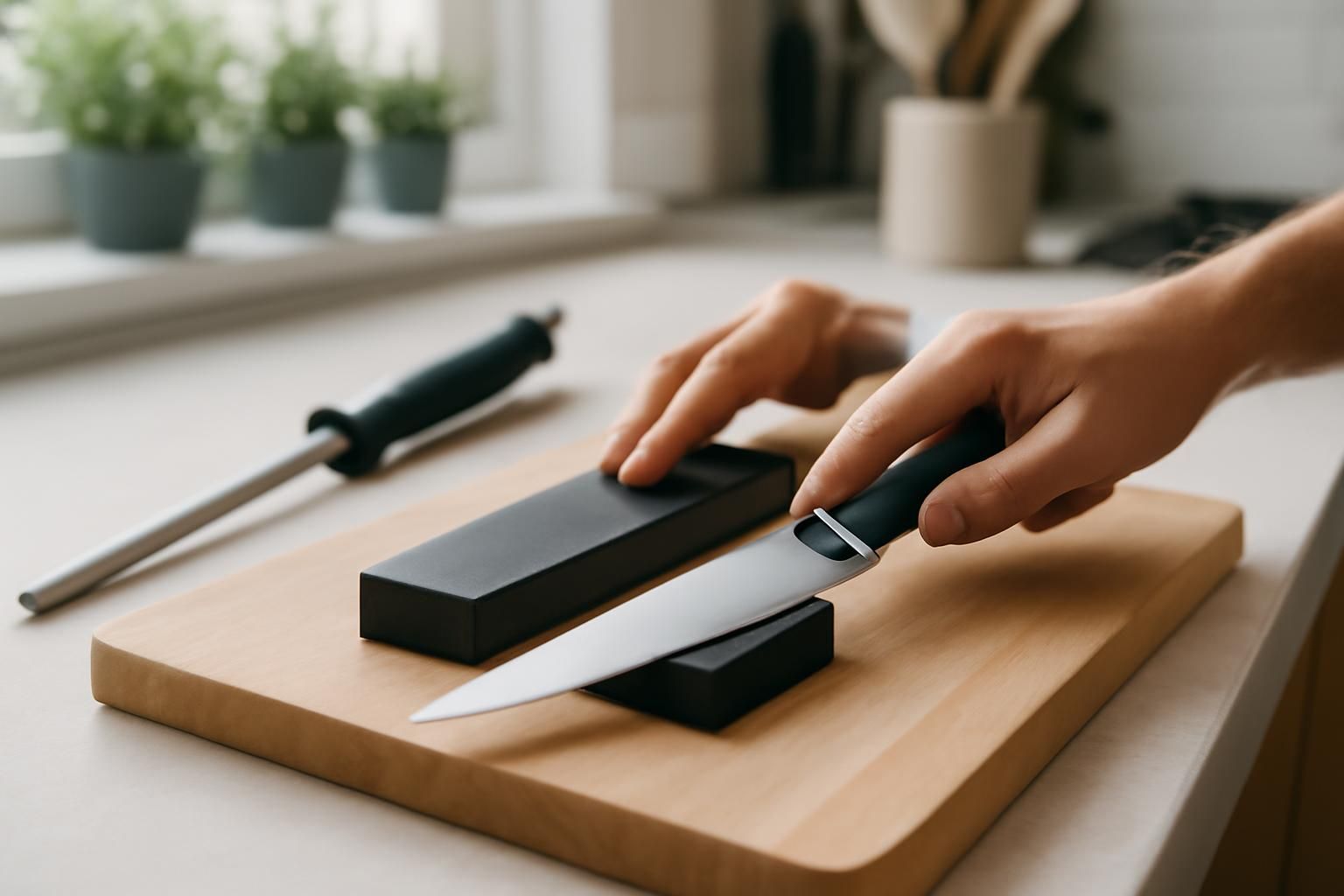
Soak the whetstone, hold the blade at 15–20°, sharpen edge-first alternating sides until you feel a burr, then hone and test.
Restore a dull kitchen knife edge using a whetstone or sharpener, then hone it for lasting sharpness.
What you’ll need
- Tool: whetstone (coarse and fine grit) or pull-through sharpener
- Tool: honing steel
- Tool: damp cloth (to secure the stone)
Materials
- Material: water (for soaking the stone)
- Material: cutting board or towel (to work on)
- Material: sheet of paper (to test sharpness)
Step by step
- 1
Tell honing from sharpening
Honing with a steel rod realigns a slightly bent edge and is done often. Sharpening with a whetstone removes metal to create a new edge and is only needed when the knife no longer cuts cleanly. Do not confuse the two.
- 2
Pick your method
A whetstone gives the best control and preserves the blade but has a learning curve. A pull-through sharpener is fast and easy but removes more metal and is less precise. Serrated and ceramic blades need specialised tools.
- 3
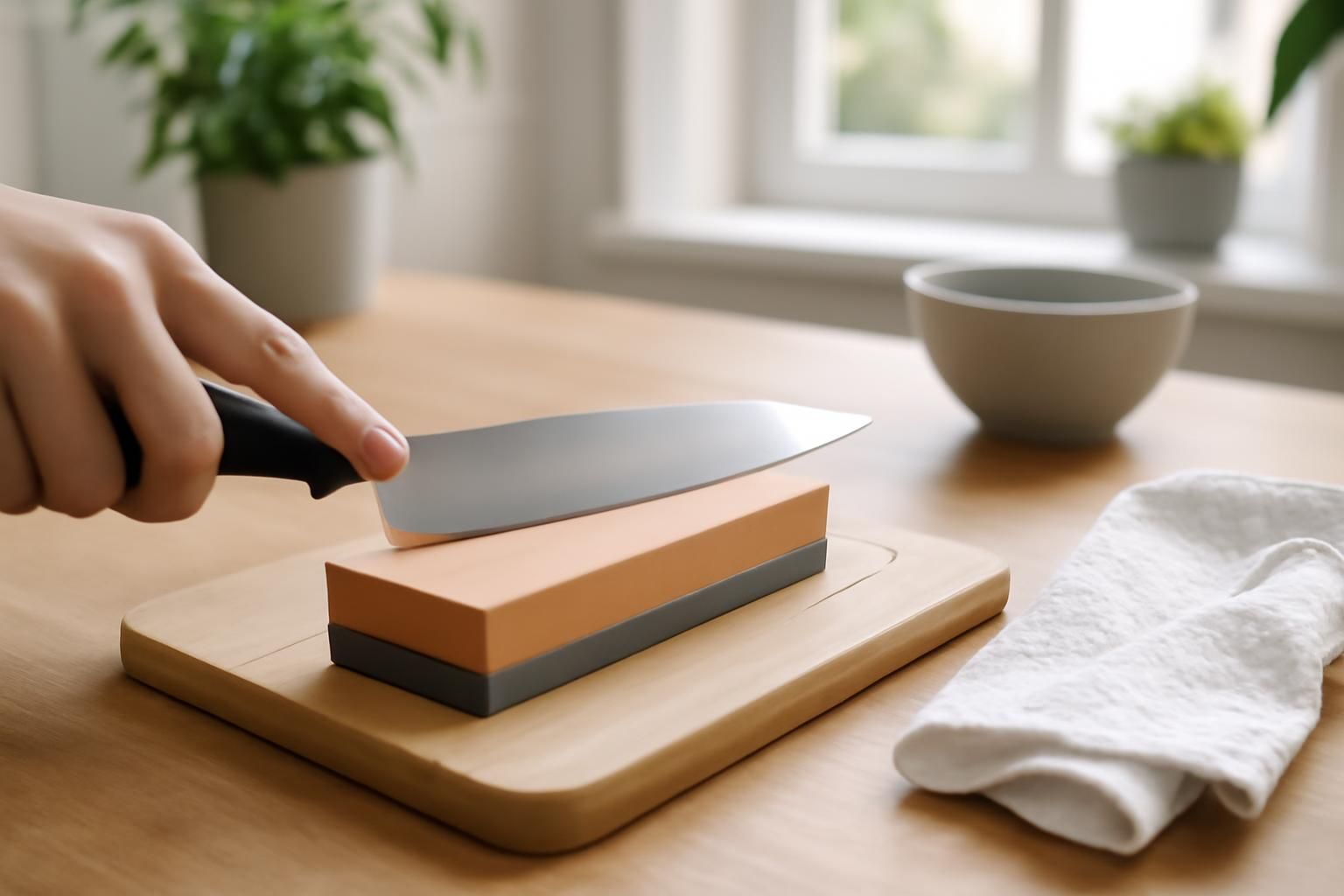
Prep the whetstone
Soak the stone in water for the time the manufacturer recommends, usually 10–15 minutes, until bubbles stop rising. Place it on a damp cloth so it cannot slide during use.
- 4
Set and hold the angle
Hold the knife at a consistent 15–20° angle to the stone. A matchbox or the spine of a folded banknote can help you gauge the angle. Maintain this angle for every stroke; varying it rounds the edge.
- 5
Sharpen edge-first, alternating sides
Push or draw the edge across the stone leading with the blade, not the spine. Work one side for several strokes, then switch to the other. Keep the motion smooth and controlled, applying light, even pressure.
- 6
Feel for the burr and progress to fine grit
Run a fingertip gently across the edge away from the blade. A slight burr — a tiny ridge of metal — tells you that side is done. Remove the burr with a few light strokes, then repeat the process on a finer grit stone to polish the edge.
- 7
Hone and test sharpness
Run the blade along a honing steel at the same angle, alternating sides with each stroke. Test by slicing a sheet of paper cleanly or cutting a ripe tomato with almost no downward pressure. Handle the knife carefully — it is now much sharper than before.
Sharpening involves working near a keen blade. Keep fingers away from the edge and move slowly. A freshly sharpened knife is sharper than expected and can slip easily. If the blade is chipped, cracked, or you are uncomfortable working with it, call a professional knife sharpener.
Common mistakes
- Confusing honing with sharpening and using only a steel rod on a truly blunt knife, which cannot restore the edge.
- Varying the angle with each stroke, which rounds the edge rather than creating a crisp bevel.
- Over-using a pull-through sharpener and grinding away the blade faster than necessary.
Frequently asked
How often should I sharpen my kitchen knives?
Hone your knives with a steel rod every few uses. Sharpen on a whetstone only when the knife no longer cuts cleanly, which for home cooks is typically every few months depending on use.
What angle should I hold the knife when sharpening?
Most Western kitchen knives are sharpened at 15–20°. Japanese knives are often 12–15°. Check your manufacturer's guidance and keep the angle consistent for every stroke.
Can I use a pull-through sharpener instead of a whetstone?
Yes, but pull-through sharpeners remove more metal and offer less control. They are convenient for quick touch-ups, while a whetstone gives a finer, longer-lasting edge and preserves the blade.
How do I know when the knife is sharp enough?
Test by slicing a sheet of paper cleanly from top to bottom, or by cutting a ripe tomato with almost no downward pressure. If the blade bites in smoothly, it is sharp.
Do I need to soak the whetstone before use?
Most water stones need soaking until bubbles stop rising, usually 10–15 minutes. Some newer splash-and-go stones only need a quick rinse. Always follow the manufacturer's instructions.
When should I call a professional knife sharpener?
Call a professional if the blade is chipped, cracked, has a bent tip, or if you are not confident holding a consistent angle. Professional sharpeners can also restore serrated or ceramic blades.