Quick answer
Release the plunger rod, load the cartridge, and cut the nozzle at 45 degrees to a 5–6 mm opening. Hold the gun at roughly 45 degrees and pull smoothly along the joint. Wet-smooth the bead immediately with a gloved finger or damp cloth. Release the rod after each run to stop oozing.
A caulking gun applies sealant in a smooth, controlled bead. Most messy results come from skipping the setup steps — loading the cartridge wrong, cutting the nozzle too large, or forgetting to release the plunger after each run.
What you’ll need
- caulking gun
- sealant cartridge
- sharp knife
- masking tape
- damp cloth or disposable glove
- cling film
Step by step
- 1
Prepare and load the cartridge
Pull the plunger rod all the way back to release tension. Cut the cartridge nozzle at a 45-degree angle. Pierce the foil seal inside with a long nail or the rod tip. Insert the cartridge into the gun barrel and push the rod forward until it contacts the cartridge base.
- 2
Cut the nozzle to the right width
For most bath and kitchen joints, cut the nozzle so the opening is 5–6 mm across. Cutting too large wastes sealant and makes the bead impossible to smooth neatly. Start small; you can always trim more.
- 3
Apply the bead at the right angle and speed
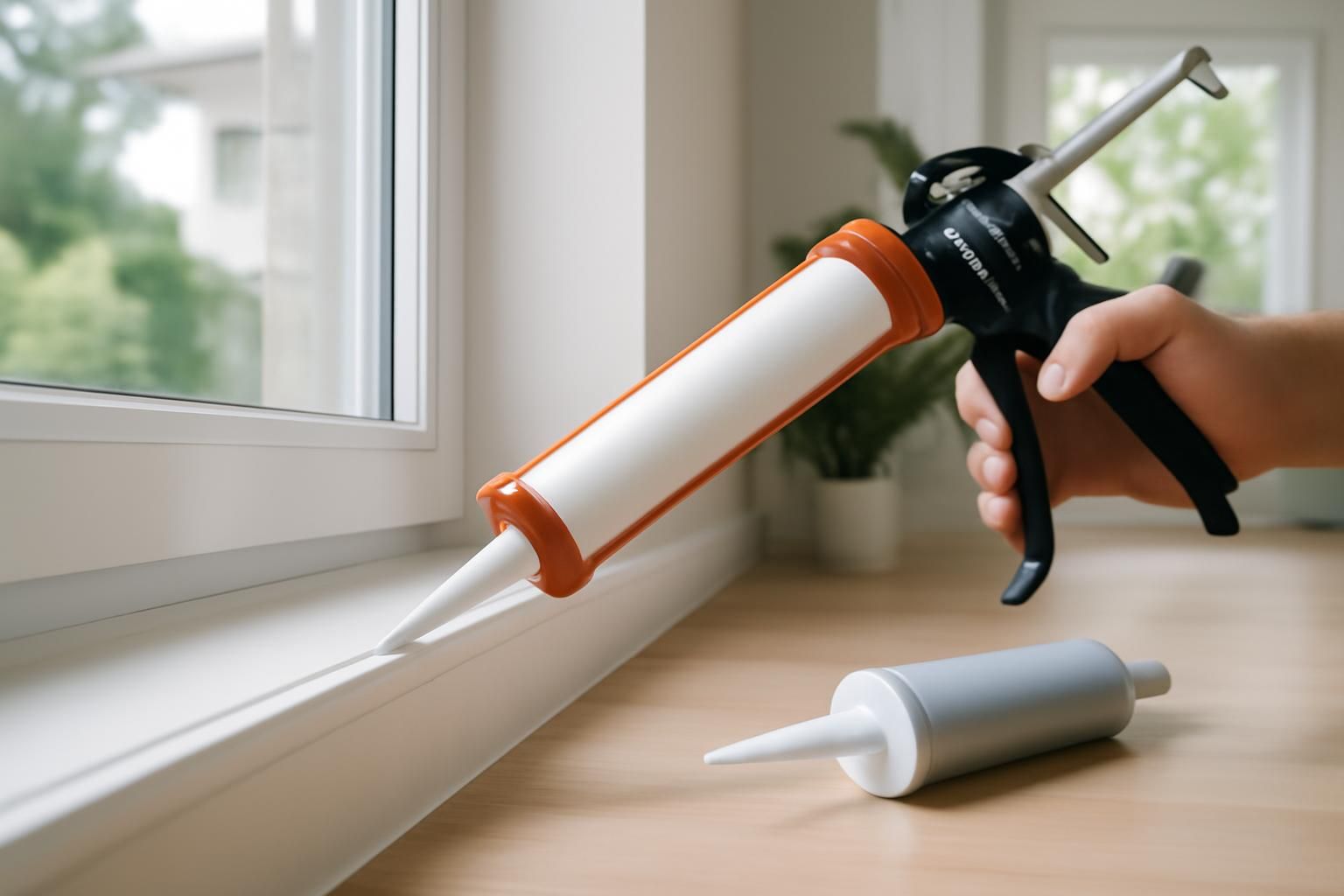
Hold the gun at roughly 45 degrees to the joint. Pull the gun towards you in one steady motion, squeezing the trigger to keep pressure consistent. Move at a walking pace — too fast leaves gaps; too slow piles up excess sealant.
- 4
Smooth the bead immediately
You have about 60 seconds before the sealant skins over. Run a gloved finger or a damp cloth along the bead in one continuous pass to press it into the joint and remove excess. Peel away masking tape immediately for a crisp edge.
- 5
Stop oozing and store leftovers
Release the plunger rod by pressing the thumb lever and pulling the rod back slightly. This stops sealant oozing out between runs. To store a part-used cartridge, squeeze a small blob of sealant out to clear the nozzle, then cover the tip tightly with cling film and replace the cap.
Work in a well-ventilated area because sealant fumes can irritate eyes and throats. Mask adjacent tiles, worktops, and floors before you start — wet sealant is extremely slippery and almost impossible to remove from porous surfaces once cured. Follow the product label for curing times and safe cleanup. Never mix sealants with other chemicals or cleaners.
Common mistakes
- Cutting the nozzle too wide — a 5–6 mm opening is correct for most bath and kitchen joints; cutting too large wastes sealant and makes finishing harder.
- Moving too fast or too slow — both cause an uneven bead that will not seal gaps properly.
- Not releasing the plunger rod after each stroke, leading to continuous ooze and wasted product.
Frequently asked
Can I use a caulking gun for frame sealant, silicone, and expanding foam cartridges?
Standard caulking guns work for most sealant and silicone cartridges. Expanding foam usually needs a dedicated foam gun with a different thread and valve system. Check the cartridge label to confirm compatibility before buying.
How long should caulk be left before it gets wet?
Most bathroom silicones need 24 hours to cure fully before they can get wet. Some fast-cure products claim 1–3 hours, but 24 hours is the safest rule. Check the product label for exact curing times.
How do I remove a cartridge that is stuck inside the gun?
Press the thumb release on the plunger rod and pull the rod all the way back. If the cartridge still will not slide out, twist it while pulling. For dried sealant around the nozzle, cut it away with a knife. Never force the cartridge out by hammering the rod.